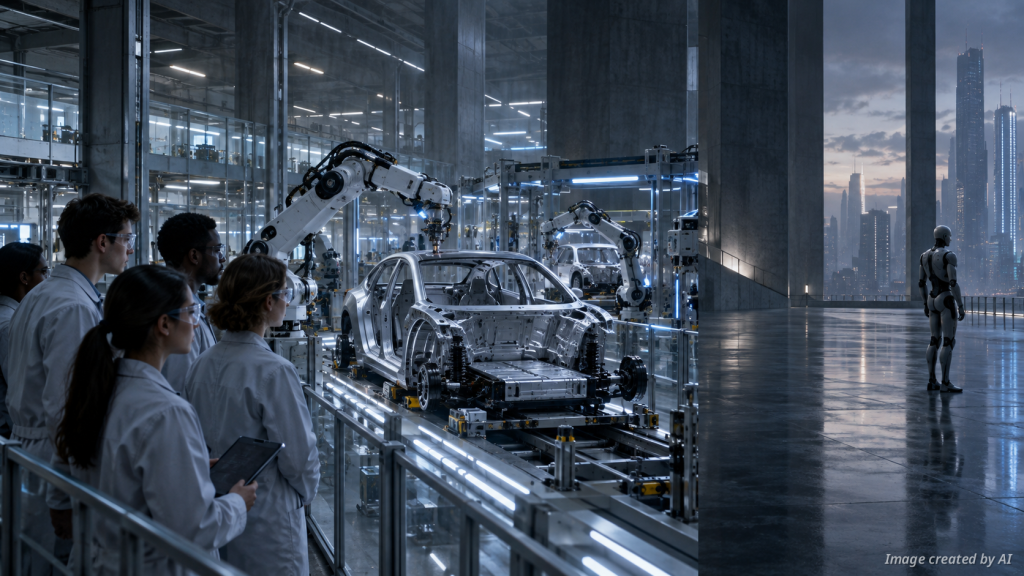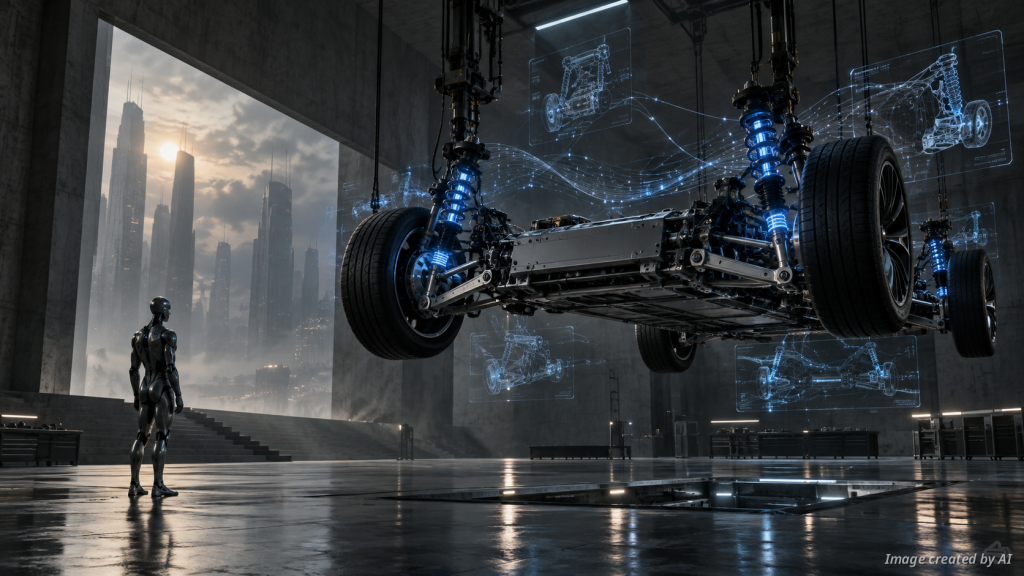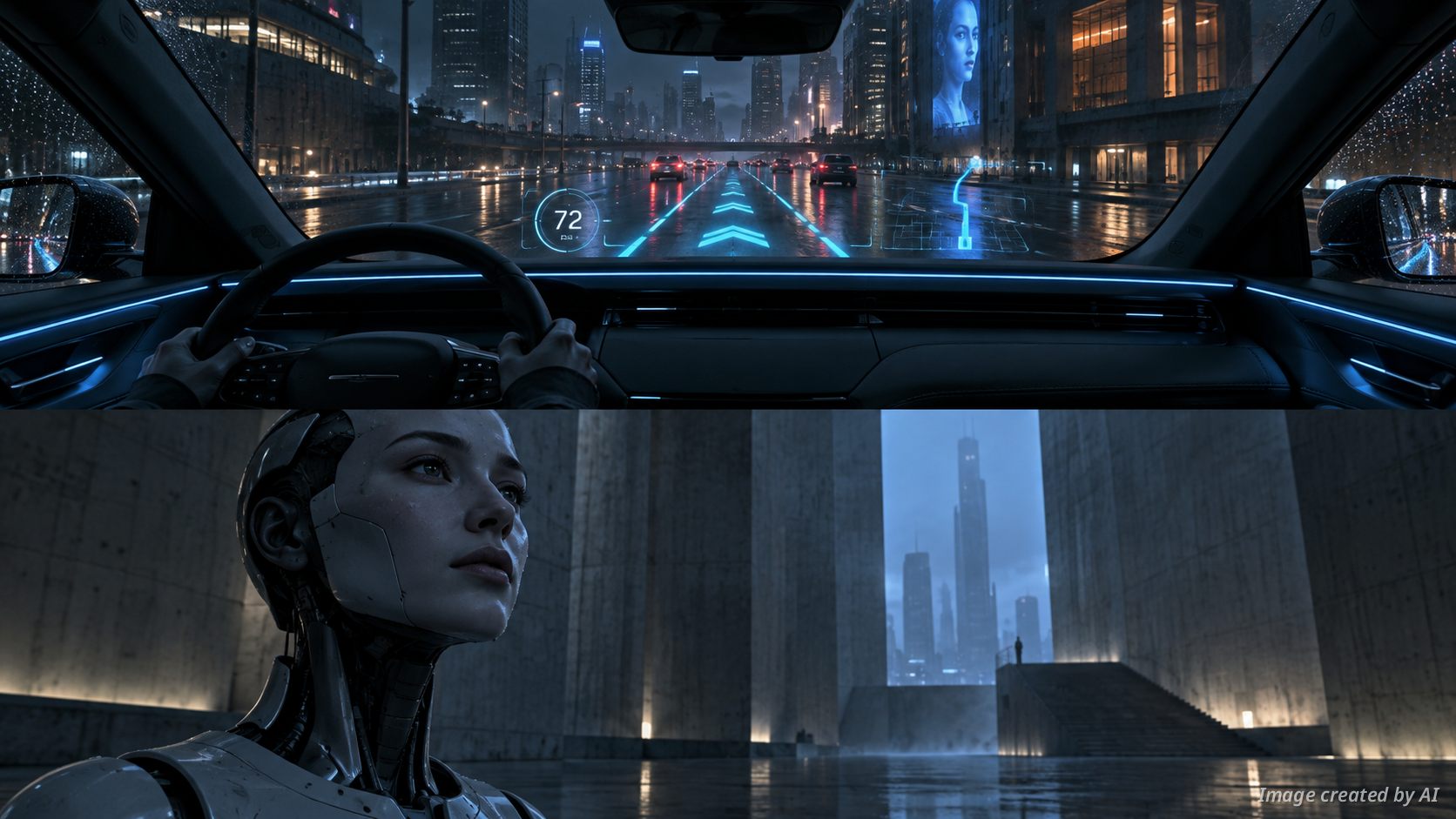
In an era of relentless technological advancement, the electric vehicle (EV) industry has introduced new innovations that are transforming the driving experience. One of the most exciting technologies for enthusiasts of the AR and VR worlds is the integration of Augmented Reality (AR) into windshield display systems [2].
This technology goes beyond traditional displays; it integrates digital information directly into the real-world environment that the driver sees ahead. It allows drivers to access critical information without taking their eyes off the road [3].
What is Augmented Reality (AR) in the context of electric vehicles?
Augmented Reality, or AR, is a technology that adds virtual images to the real world [4]. When applied to electric vehicles, it turns the windshield into a large, intelligent screen. Drivers can see information such as speed, energy levels, and navigation routes appearing directly in their line of sight [1].
This system works by using advanced sensors and cameras to analyze the surrounding environment. The data received is processed by AI to display information tailored to the vehicle's position. You can learn more about integrating lidar, radar, and cameras for ADAS system accuracy to gain a deeper understanding of the foundations of this technology.
Benefits for driving safety
Safety is at the heart of electric vehicle development. The use of AR effectively reduces driver distraction [2]. Typically, drivers must look down at the dashboard or the central screen of the car, which takes time away from watching the road.
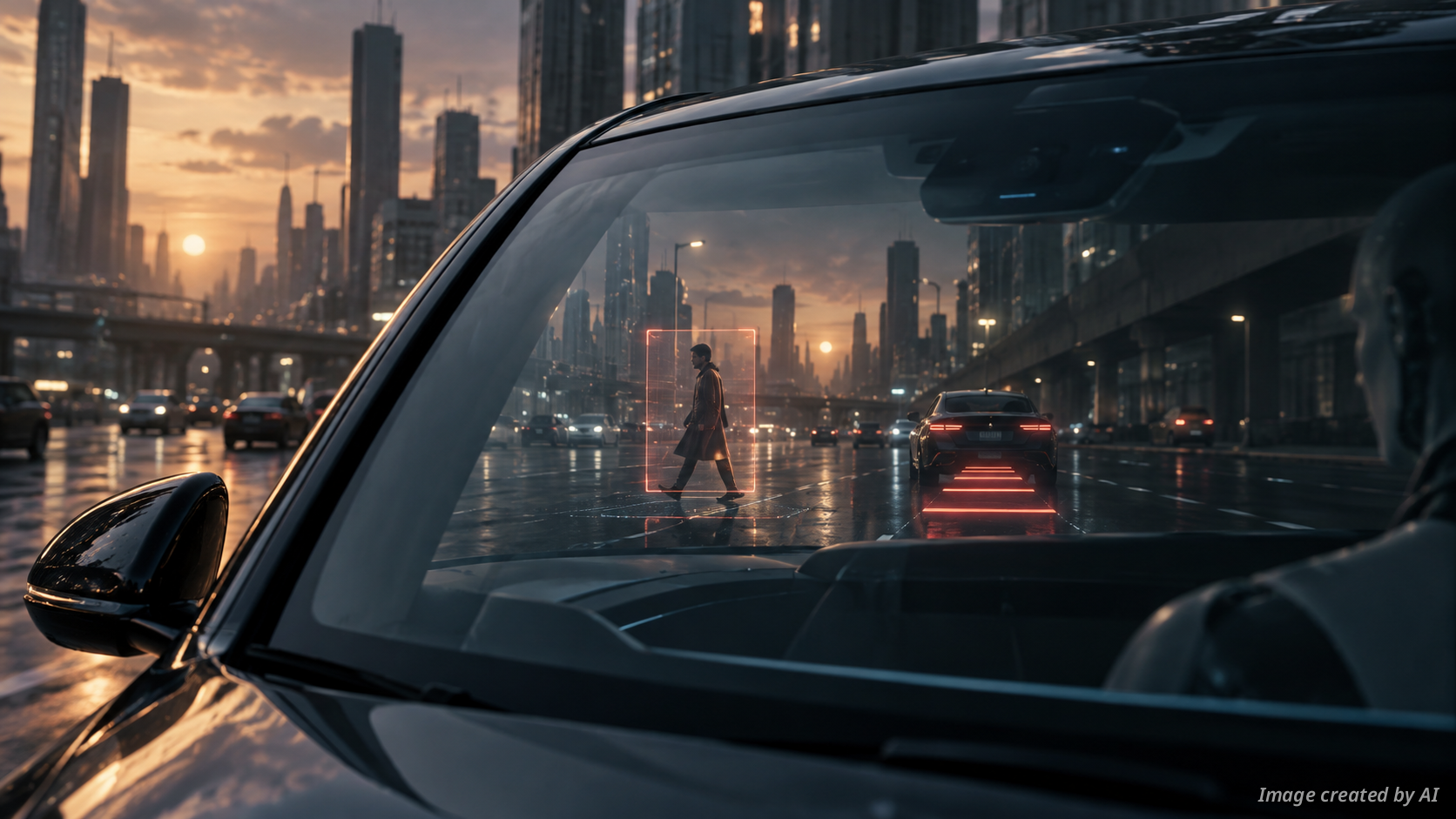
With an AR system, necessary information is displayed directly on the windshield. This allows drivers to make faster decisions in emergency situations. The technology of using AR in automobiles also helps provide warnings about objects or pedestrians that might be in blind spots.
Coordination of AI and AR in vehicles
Developments in 2026 will see a clearer integration between AI and AR [5]. AI acts as the "brain" that analyzes data from various sensors. It then transmits this information through AR to provide the driver with an intuitive visual display.
For example, the system can draw navigation paths that are superimposed onto the actual road surface. This makes driving at night or in heavy fog much safer. You can read more about using AI for predictive electric vehicle maintenance to reduce repair costs to get an overview of how AI is used in electric vehicles.
Future trends of AR in electric vehicles
In the future, AR will not stop at displaying basic information. It will evolve into an intelligent entertainment and communication system. Passengers may be able to use AR to view information about tourist attractions the car is passing by.
Furthermore, AIoT technology will play a crucial role in connecting vehicles to city infrastructure. This will enable electric vehicles to receive real-time traffic data clearly [5].
Development challenges
Although the technology is fascinating, there are still challenges. AR displays must be highly stable and not obstruct the driver's view. Heat from the processing system is another factor that electric vehicle manufacturers must address.
Designing a user interface that feels as natural as possible is essential. The displayed information must not be too dense so that the driver can maintain optimal focus on controlling the vehicle [2].
Conclusion
AR technology on electric vehicle windshields is no longer a distant concept. It is a significant step toward making driving safer and more convenient. For those who love AR and VR technology, this is an opportunity to experience the digital world in daily life through their vehicles.
Investing in electric vehicles with these technologies will transform your travel experience into something exciting and modern. Follow new developments in the electric vehicle industry so you don't miss out on these fascinating innovations.
More Information
- AR (Augmented Reality): A technology that overlays virtual images onto the real world to improve information perception for users [1].
- HUD (Head-Up Display): A system that projects driving information onto the windshield so the driver can view it without taking their eyes off the road [2].
- ADAS (Advanced Driver Assistance Systems): Intelligent driver assistance systems that use sensors and cameras to increase driving safety [3].
- Virtual reality: A technology that creates a simulated environment to replace the real world, which differs from AR, which adds information to the real world [4].
- AIoT (Artificial Intelligence of Things): The coordination between Artificial Intelligence (AI) and the Internet of Things (IoT) to create smarter and better-connected systems [5].