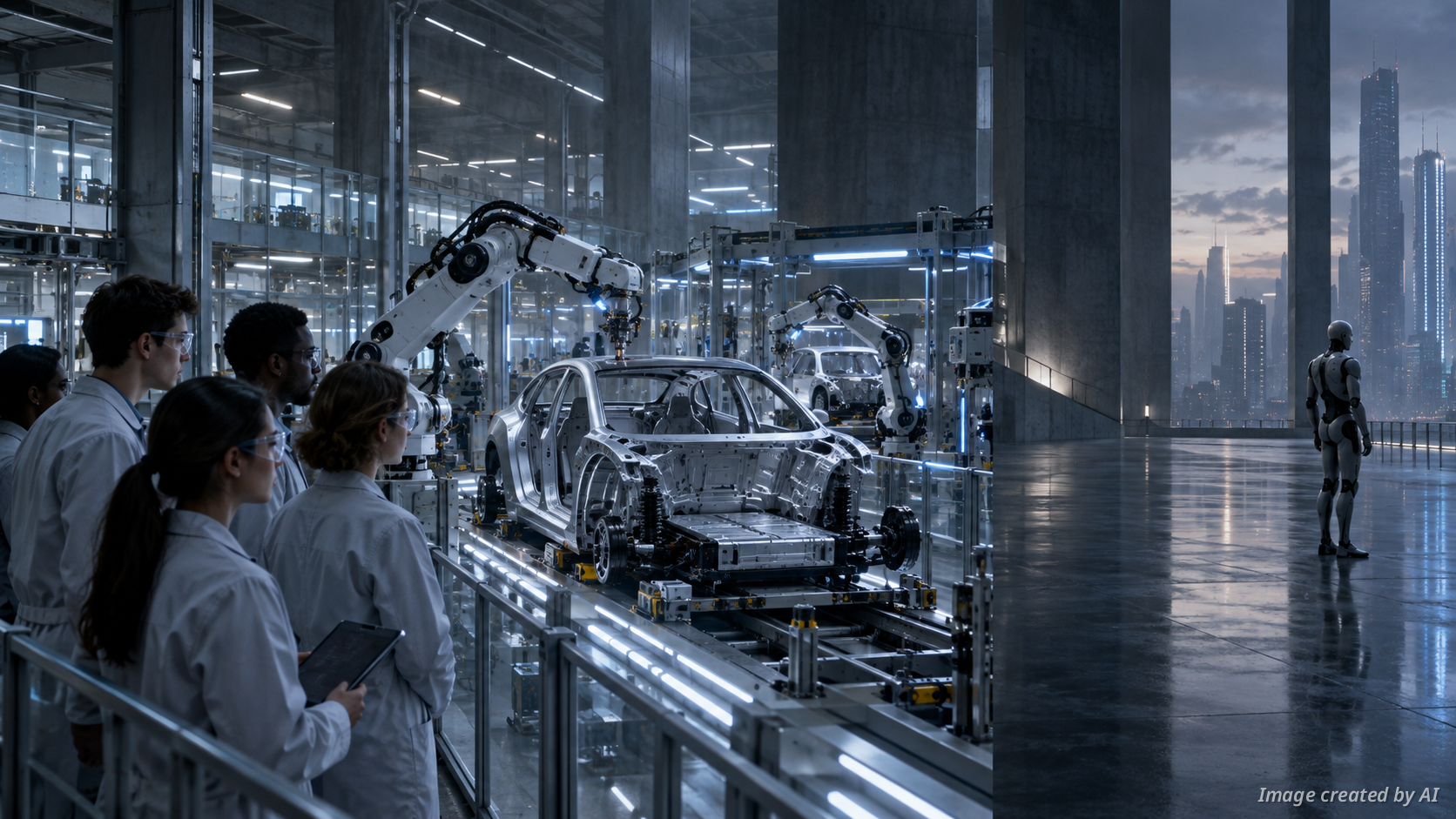
The world is entering a new era of environmentally friendly transportation. The electric vehicle (EV) industry has become a primary focus of economic development in many countries. For the Lao PDR, the transition to electric vehicles is not only about reducing fuel imports but also an opportunity to create new jobs.
However, the greatest challenge currently is the shortage of personnel with specialized skills. Educational institutions and universities play a vital role in addressing this issue [1]. Updating curricula to be modern is a necessary first step.

Skill Requirements in the Electric Vehicle Era
The skills required in the electric vehicle industry differ from those of traditional internal combustion engines. Workers need knowledge of high-voltage electrical systems, computer software, and battery technology [2]. Universities must collaborate with the business sector to understand the actual needs of the market.
Training should not be limited to the classroom. Learning through online systems and on-site internships will help learners acquire job-ready skills [3]. You can study more information regarding Sensor Data Fusion in Electric Vehicles: The Heart of Perception Systems to understand the complexity of this technology.
The Role of Educational Institutions
Educational institutions must adapt rapidly to meet industry demands. Creating short-term courses for experienced technicians is an effective approach [2]. This method allows the existing workforce to upskill themselves without excessive time or costs.
Furthermore, international cooperation is inevitable. For example, Japan has begun training youth in electric vehicle battery production skills from a young age [4]. This is a good lesson for long-term planning.
Creating Market-Responsive Curricula
The development of high-quality human resources must be based on practical application [5]. Universities should invest in modern teaching equipment. Having an electric vehicle laboratory will allow students to understand working systems in depth.
Building partnerships with leading electric vehicle companies will ensure that curricula remain relevant to reality [3]. Students who intern with these companies will have the opportunity to secure stable employment.
Challenges in the Transition
Even with high demand, many companies are not yet prepared to fully commit to training their employees [3]. This issue requires government support. Providing tax incentives or budgetary assistance for training would be a great incentive.
Studying Challenges in Electric Vehicle Battery Recycling and Sustainable Solutions is another field that requires knowledgeable personnel. The world does not just need drivers; it needs engineers who understand the entire vehicle lifecycle.
Strategies for Educational Institutions
To succeed, educational institutions should follow these strategies:
- Create short-term and long-term curricula that are updated according to new technology [2].
- Integrate learning with actual work through internship programs [5].
- Build cooperation networks with the electric vehicle industry both domestically and internationally [2].
- Utilize digital technology and online learning to expand access opportunities [2].
Preparing the Workforce for the Future
The transition to electric vehicles is a long journey. Success does not depend solely on technology, but on people. Investing in education is the most worthwhile investment.
By collaborating between universities, the government, and the private sector, the Lao PDR can become a hub for learning and developing electric vehicle personnel in the region. Start by improving curricula today to create a sustainable future tomorrow.
Learn more about industrial development through the report on solving the human resource shortage to see a regional overview [1]. Good knowledge and preparation will help us overcome this challenge gracefully.
More Information
- Personnel Shortage: A situation where new industries like electric vehicles require specialized labor, but the current education system is not producing enough to meet market demand.
- Electric Vehicle Technology: Vehicle systems that use electrical energy from batteries instead of fuel, requiring knowledge of high-voltage electricity and computer control.
- Short-term Training: Learning programs that focus on specific skills quickly, so that workers with existing foundations can adapt to new technology.
- Battery Production: The process of creating and assembling energy cells that are the core of electric vehicles, a field requiring high expertise in chemistry and engineering.
- Educational Quality: Teaching and learning standards that emphasize both theory and practical application so that learners can solve problems in real-world working situations.