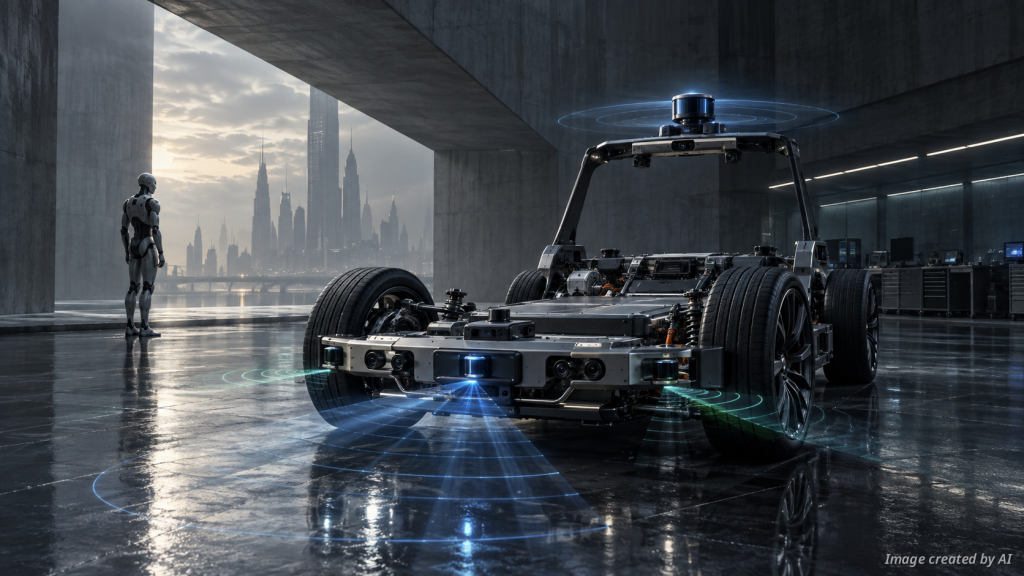
Electric vehicle (EV) technology is advancing rapidly. The heart of an electric vehicle is its Battery Management System (BMS). Currently, the integration of artificial intelligence (AI) to enhance the efficiency of this system represents a significant milestone for battery researchers.
Traditional BMS operate based on pre-defined rules. However, AI-driven systems can adapt to real-world usage conditions. This allows for higher accuracy in predicting battery status [1]. You can learn more about the transition from passive to adaptive systems to understand the importance of this technology.

The Role of AI in Enhancing Battery Efficiency
AI plays a crucial role in analyzing the State of Charge (SoC) and State of Health (SoH) of batteries. These systems monitor battery changes throughout their operational lifespan. As a result, users can have greater confidence in their driving range [1].
The use of AI also aids in efficient energy management. By learning driving patterns, AI can optimize power delivery. This not only saves energy but also helps extend the battery's service life [1].
Market Growth and Challenges
The market for AI-powered battery management is expanding rapidly. The primary driver is the increasing global demand for electric vehicles [2]. You can read the market analysis for AI-optimized battery management to view future trends.
However, there are challenges that researchers must face. High development costs and system connectivity issues remain limitations. Technical errors in the BMS could impact vehicle safety [2].
Sensor Technology and Communication
Modern BMS require fast communication. The use of technologies like Bluetooth 5.4 helps ensure stable data transmission between sensors [3]. You can learn more about using Bluetooth to improve BMS here.
Additionally, integrating data from multiple types of sensors is essential. Researchers can refer to the article Sensor Fusion in Electric Vehicles: The Heart of Perception Systems to understand the coordination of intelligent systems.
Safety and Battery Health Maintenance
Safety is the top priority. A good BMS must be able to precisely control temperatures during charging [5]. AI systems help detect abnormalities and provide warnings before danger occurs.
Continuous data monitoring allows fleet managers to better plan maintenance. This data helps identify when a battery requires inspection [5]. You can view a battery lifespan management guide for best practices.
The Future of Energy Management
Future battery development will be linked to the Internet of Things. Data exchange between vehicles and infrastructure will become standard [4]. Researchers should follow the overview of electric vehicle battery technology to keep up with the changes.
Human resource development in this sector is equally important. You can read more about human resource development for the new electric vehicle industry to prepare for the future.
Conclusion
The use of AI in BMS is not just about software; it is a revolution in electric vehicle efficiency. For researchers, focusing on the development of adaptive and highly secure systems is the key to success in the global market.
More Information
- SoC (State of Charge): An indicator of the remaining energy level in a battery, which AI helps predict with higher accuracy for better trip planning.
- SoH (State of Health): A measurement of the overall condition of a battery compared to its new state, helping users understand degradation over time.
- BMS (Battery Management System): A control and management system that protects the battery from abnormal operation and optimizes power delivery.
- Adaptive Controls: Control systems that can automatically adjust operations based on the environment and driver usage patterns.
- Sensor Fusion: The process of combining data from multiple sensors to provide complete and clear information about the system's status.