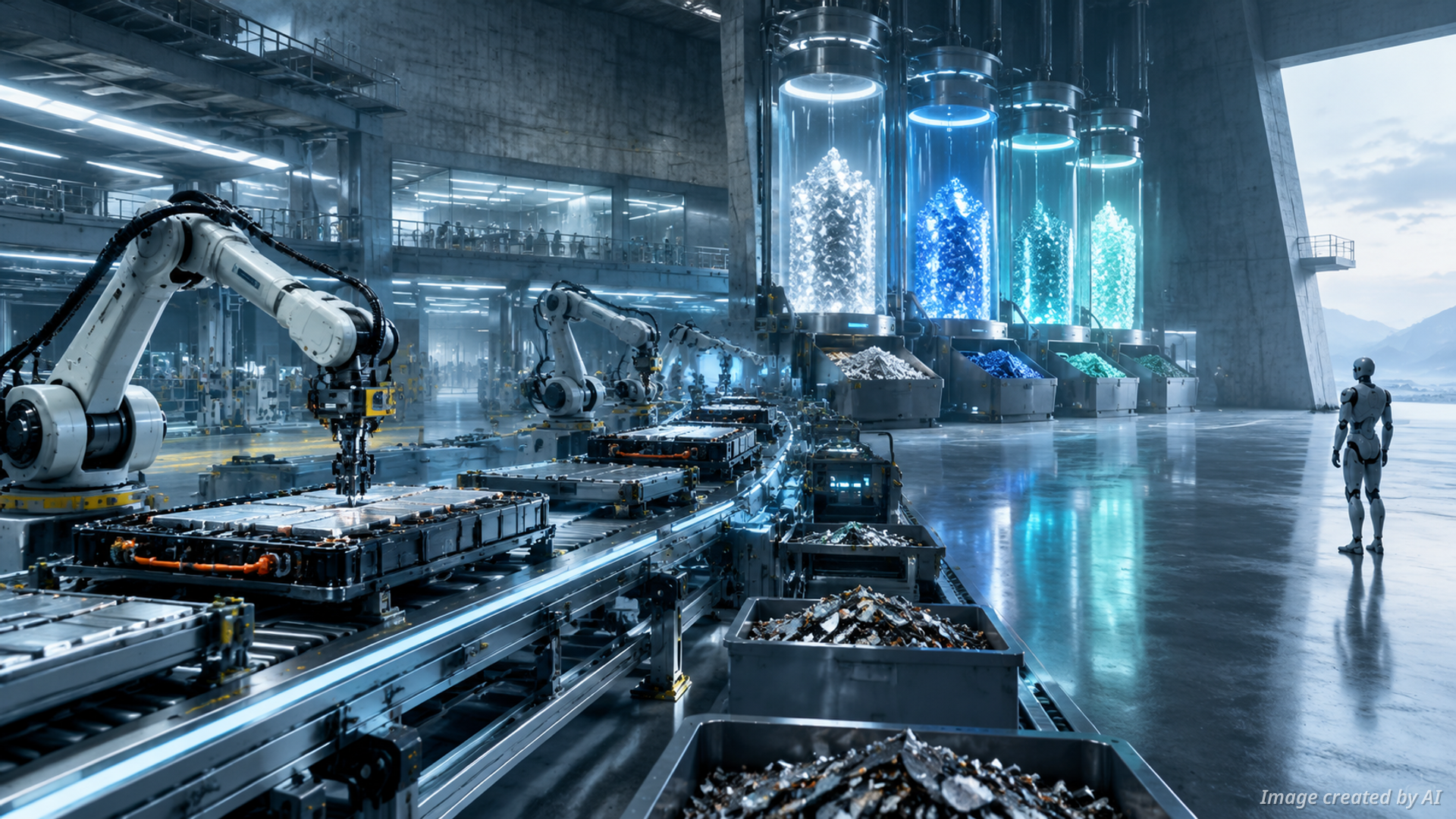
The growth of the electric vehicle (EV) industry has brought about major changes in the energy sector. However, the issue of managing end-of-life batteries has become a significant challenge for environmental experts worldwide [4]. Battery recycling is not just about waste disposal; it is also about conserving valuable resources.
In the coming years, the number of EV batteries reaching the end of their service life will increase significantly. Data from the International Energy Agency (IEA) indicates that by 2035, the volume of lithium-ion batteries requiring disposal could reach 11 million tons [3]. This is a warning signal that operators must begin planning to address.

Complexities in the Recycling Process
Battery recycling is not a simple process. It is highly complex and requires specialized expertise [1]. The core problem lies in separating the various components from damaged batteries. If a battery is in poor condition, recovering valuable raw materials becomes extremely difficult.
Furthermore, the purity of the recovered raw materials is a decisive factor. For example, lithium must have a purity of up to 100% to be used in the production of new batteries [1]. This difficulty significantly increases operational costs [3].
Logistics and Storage Challenges
For countries that still rely on technology imports, establishing a system for collecting end-of-life batteries is a major challenge. Companies must face issues regarding safe transportation and large-scale storage [2]. Integrating different types of batteries into a single process is currently not yet feasible [1].
Environmental experts recommend establishing strict ESG (Environmental, Social, and Governance) standards [3]. To learn more about resource management, you can read further in this article on electric battery management as a guide for development.
Sustainable Solutions for the Future
Solving this problem requires international cooperation. Recycling companies should invest in automated technology to increase the efficiency of component separation [1]. With modern technology, we can recover more than 99.5% of raw materials, such as nickel, cobalt, and copper [3].
Additionally, establishing a smart energy management system will make the use of old batteries in other forms (second-life usage) more feasible. This is a method that effectively reduces environmental impact. You can view more information regarding the pressure of managing waste from electric vehicles to understand the regional context.
The Role of Policy and Cooperation
Government policy plays a crucial role in promoting recycling. In many countries, battery manufacturers must bear the costs of collection [5]. Cooperation between the public and private sectors will be a key factor in building a sustainable ecosystem.
Creating modern electric vehicle architecture also helps ensure that battery design is easier to dismantle in the future. Companies that adapt quickly will have a competitive advantage in the market. You can study more information on modern recycling techniques to develop your business.
In conclusion, recycling electric vehicle batteries is a challenging but necessary task. Through investment in technology, international cooperation, and clear policies, we can turn this challenge into an opportunity to build an environmentally friendly circular economy [4].
More Information
- Lithium-ion battery: A type of battery used in electric vehicles that has high energy storage capacity but requires a complex recycling process to prevent pollution.
- Battery recycling: The process of collecting, separating components, and bringing valuable raw materials from end-of-life batteries back into the industry.
- ESG standards: Criteria for evaluating a company's performance in terms of Environmental, Social, and Governance (ESG) for sustainability.
- Circular economy: A model of production and consumption that emphasizes sharing, reusing, and recycling materials to minimize waste.
- Second-life usage: Repurposing batteries that can no longer be used in electric vehicles for other tasks, such as solar energy storage.